Trading License
Import, export, distribution and sale of specified goods, from general goods to regulated commodities. Precious metals, diamonds and certain commodities carry additional DMCC approvals and standards.
Business Setup in UAE · Dubai · JLT
Last updated: August 2026 · Reviewed by the Stevva setup team
Dubai's flagship free zone in Jumeirah Lakes Towers — 25,000+ member companies, the world's most-awarded free zone, and the address banks and global counterparties recognise instantly. Stevva handles your DMCC setup end to end — licensing, visas, bank account, and the annual audit DMCC requires — at a fixed fee agreed before we start.
What it is
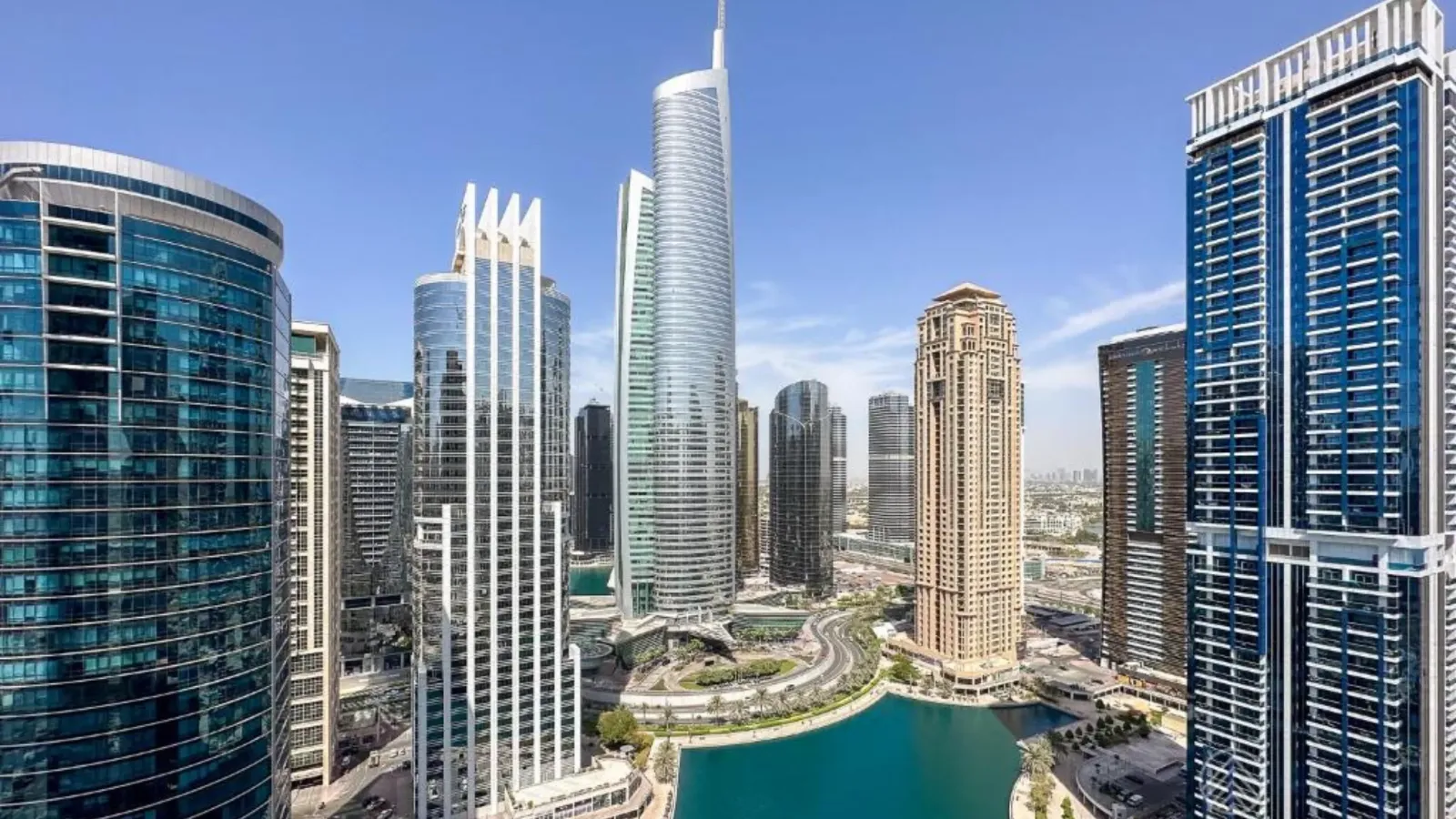
DMCC — the Dubai Multi Commodities Centre — is a free zone established by the Government of Dubai in 2002, headquartered in Jumeirah Lakes Towers (JLT) and Uptown Dubai. Created to make Dubai a global hub for commodities trade, it has grown into the emirate's largest free zone by company count — more than 25,000 member businesses across trading, professional services, technology, precious metals, energy, agri-commodities and crypto — and has been named Global Free Zone of the Year by the Financial Times' fDi magazine for ten consecutive years.
Three things define DMCC:
Honest fit check
DMCC is the right choice when credibility, ecosystem and banking strength justify a premium over budget zones. Here's the honest picture.
If DMCC isn't the fit, we'll say so and shortlist the zone that is — we work across 40+ zones.
Licenses
Import, export, distribution and sale of specified goods, from general goods to regulated commodities. Precious metals, diamonds and certain commodities carry additional DMCC approvals and standards.
Professional services: consultancy, management, IT, marketing, brokerage-adjacent and advisory activities.
Light manufacturing, processing and packaging, with suitable facilities.
Transparent pricing
DMCC prices its fees item by item rather than in bundled packages — so the honest way to budget is to build the first year up line by line. Indicative figures for a standard (non-regulated) activity:
| Item | Indicative AED | Note |
|---|---|---|
| Company registration | ~9,020 | One-time |
| Business license | ~20,285 | Annual; varies by activity |
| MoA notarisation (standard template) | ~2,020 | One-time |
| Establishment card | ~1,825 | Company immigration file; renews ~1,820 |
| Flexi-desk (minimum workspace) | ~15,000–19,000 | Annual; mandatory — no zero-office option |
| Residence visa, per person (permit, medical, Emirates ID, stamping) | ~3,500–5,000 | Per visa |
| Realistic first-year total, 1 visa | ~AED 47,000–55,000 | Excludes share capital & insurance |
Figures are indicative, based on DMCC's published guidance and current market rates in AED as of August 2026. DMCC applies a detailed schedule of charges that varies by activity, office type and approvals, and amends it without notice. Your Stevva quote itemises the exact current DMCC fees for your specific structure, plus our professional fee — one fixed, all-inclusive number agreed before we start.
| Workspace | Typical visa quota | Indicative annual cost |
|---|---|---|
| Flexi-desk | up to ~2–3 visas | from ~AED 15,000 |
| Serviced / business-centre office | scales with size | from ~AED 30,000 |
| Fitted office (leased) | ~1 visa per 9 sqm | market rent, JLT |
Visas
Your DMCC visa quota is set by your workspace: a flexi-desk supports roughly 2–3 visas, and larger offices scale by floor area. Each residence visa (investor or employee) costs approximately AED 3,500–5,000 end to end — entry permit, medical, Emirates ID and stamping — with health insurance separate. Dependents (spouse, children, and parents subject to conditions) can be sponsored once income thresholds are met.
Two practical points founders miss:
Timeline
A standard DMCC license typically issues within 5–10 working days of complete documents and approvals — around two weeks in practice. The full journey to an operational company with visas and a bank account is realistically 4–8 weeks, with the corporate bank account (10–30 business days at most banks) as the long pole. Regulated activities add approval time.
We confirm your activities against DMCC's list, flag any regulated-activity approvals, size your workspace to your visa plan, and send one fixed, all-inclusive quote.
Name reservation, application and shareholder KYC through the DMCC portal. DMCC's due diligence is thorough — clean, complete files pass fastest, and preparing them is our job.
MoA signing, workspace agreement, payment — DMCC issues your license and establishment card. Your company exists, with a name ending in "DMCC".
We prepare your bank file and support account opening, then you deposit the AED 50,000 share capital — which becomes working capital you can spend.
Entry permits, medicals, Emirates IDs and stamping for your team — then corporate tax registration, VAT if applicable, bookkeeping and the annual audit, all under one roof.
Documents
The costs nobody shows you
DMCC is a jurisdiction with real annual obligations. Budget for the lifecycle, not just year one:
This is where Stevva's model earns its keep: our audit and accounting teams run your books to audit-ready standard through the year, produce the audited financials DMCC requires, and file the renewal on time — one firm, no scramble every renewal season.
Tax
A DMCC company is not tax-exempt by default. The accurate 2026 position:
Every DMCC company must register for UAE corporate tax and file annual returns. Free zone companies can access the 0% rate on qualifying income as a Qualifying Free Zone Person (QFZP) — subject to substance, transfer pricing and income-type conditions; otherwise the standard 9% applies above the threshold. DMCC's mandatory audit pairs naturally with the substance documentation QFZP status demands — companies targeting 0% treatment are usually better positioned here than in zones with no audit discipline.
Mandatory registration once taxable supplies exceed AED 375,000/year (voluntary from AED 187,500). DMCC is not a designated zone, so normal UAE VAT rules apply to your supplies — including goods traded within JLT.
Between corporate tax filings and DMCC's audit requirement, proper accounting is mandatory twice over.
Stevva's tax and accounting arms handle corporate tax registration and filing, VAT compliance and bookkeeping for the companies we form — and our audit team closes the loop DMCC requires each year.
Why Stevva
DMCC's itemised fees mapped to your exact structure, our professional fee stated plainly, nothing added later.
Most setup agents disappear after incorporation — but DMCC companies need audited financials every single year. Stevva's accounting and audit teams handle that in-house, so renewal never becomes a fire drill.
If DMCC's premium doesn't pay for itself in your model — if IFZA or Shams serves you at half the cost — we'll say so before you spend. We work across 40+ zones and aren't paid to push one.
Precious metals, commodities and crypto applications live or die on scoping and documentation. We get the approvals path right before you commit.
Real advisors on WhatsApp and phone, Mon–Fri 9–18 GST.
Get started
Tell us your activity, visa plan and whether anything regulated is involved. We'll reply within one business day with a fixed, all-inclusive quote — DMCC's fees itemised for your structure, our fee stated plainly.
Quick answers
The DMCC business license itself starts at approximately AED 20,285 per year for standard activities. But DMCC prices item by item, so the realistic first-year budget is higher: company registration (~AED 9,020), MoA notarisation (~AED 2,020), establishment card (~AED 1,825) and a mandatory flexi-desk (from ~AED 15,000/year) bring a one-visa setup to roughly AED 47,000–55,000 in authority and workspace costs, before health insurance. Stevva quotes the exact current fees for your specific activity.
You're paying for recognition and ecosystem: a Government of Dubai free zone with 25,000+ member companies, ten consecutive Global Free Zone of the Year awards, sector infrastructure (Diamond Exchange, Tea and Coffee Centres, Crypto Centre) and governance — mandatory audits and real KYC — that makes banks and global counterparties treat DMCC companies more seriously. For trading houses, commodities firms and businesses selling to corporates, that premium routinely pays for itself; for a lean consultancy it often doesn't, and we'll tell you which side you're on.
AED 50,000 per company, with at least AED 10,000 per shareholder. It's deposited into the company's UAE bank account after incorporation — and then it's fully usable working capital, not a locked deposit or a fee. Certain regulated activities carry higher capital requirements.
Yes. Every DMCC company must prepare annual audited financial statements and file them with DMCC, generally in connection with license renewal. Budget roughly AED 5,000–15,000 per year for the audit depending on activity and volume. Stevva's accounting and audit teams keep your books audit-ready year-round and handle the filing, so renewal never stalls.
A standard license typically issues within 5–10 working days of complete documents — about two weeks in practice. A fully operational company with residence visas and a corporate bank account realistically takes 4–8 weeks, with bank account opening (10–30 business days) usually the slowest step. Regulated activities such as precious metals or crypto add approval time.
No. DMCC has no zero-office virtual license — a physical workspace is mandatory, starting with a flexi-desk from roughly AED 15,000 per year. Your visa quota is tied to the workspace: a flexi-desk supports around 2–3 visas, and larger offices scale by floor area (roughly one visa per 9 sqm in fitted offices).
Your quota depends on your workspace, not a package tier: roughly 2–3 visas on a flexi-desk, scaling with office size. Each residence visa costs approximately AED 3,500–5,000 end to end (entry permit, medical, Emirates ID, stamping) plus health insurance, and visa holders can sponsor dependents once income thresholds are met.
DMCC has one of the largest activity lists of any UAE free zone: general and specialised trading, commodities (metals, energy, agri, foodstuffs), professional and consultancy services, technology, and industrial activities — plus regulated categories like precious metals, diamonds and crypto that carry additional approvals. We map your business to the exact DMCC activity codes before you apply.
Yes — the DMCC Crypto Centre hosts one of the region's largest communities of licensed crypto, blockchain and web3 firms. Activities range from blockchain development to trading in crypto-commodities; regulated digital-asset activities need approvals beyond the standard license, in some cases involving other UAE regulators. Scoping the right activity and approvals path up front is the difference between weeks and months.
Yes — DMCC free zone companies are incorporated as FZ-LLCs with names ending in "DMCC" (for example, "Horizon Trading DMCC"). In practice that suffix works in your favour: banks and counterparties recognise it immediately as a Dubai company under DMCC's governance.
A DMCC company trades freely internationally and within free zones, but selling goods directly into the UAE mainland generally requires a mainland distributor or branch, and services to mainland clients follow the usual free zone limits. If most of your revenue will come from onshore UAE customers, a mainland license is usually the better structure — we'll tell you honestly which fits.
No. DMCC (JLT) is not on the UAE's designated-zone list, so normal VAT rules apply to your supplies — there's no special VAT treatment for goods moving within the zone. VAT registration becomes mandatory once taxable supplies exceed AED 375,000 in a 12-month period.
Every DMCC company must register for UAE corporate tax and file annual returns. Qualifying Free Zone Persons can access the 0% rate on qualifying income if they meet substance, transfer pricing and income conditions; otherwise 9% applies above AED 375,000 of taxable income. DMCC's audit requirement actually helps here — audited financials are exactly the evidence base QFZP status needs.
Most of the process runs through the DMCC portal and can be handled remotely with a power of attorney, though some steps — bank account opening, medical tests and Emirates ID biometrics for visas — require presence in the UAE. DMCC's KYC is also more thorough than budget zones, so clean, attested documents matter more than physical presence.
IFZA costs roughly half as much for a comparable one-visa setup (~AED 20,000–25,000 vs ~AED 47,000–55,000 first year) and suits consultants, SMEs and digital businesses that don't need DMCC's ecosystem. DMCC wins when your business is commodities, precious metals or crypto, when your counterparties are corporates and banks that weigh jurisdiction, or when group compliance prefers an audited, strongly governed zone. The honest test: if you can't articulate what the DMCC premium buys your specific business, take IFZA.
Renewal requires your audited financials and fee payment; missing either stalls the license and accrues penalties. Closing properly means formal liquidation — appointing a liquidator, cancelling visas, closing the establishment card and filing final accounts. Abandoning a DMCC license is the most expensive option of all: penalties compound and can escalate to legal action. As your agent, Stevva tracks every deadline and handles renewal or wind-down end to end.